Conference Presentation
Palestinian–Israeli Dialogue and Coexistence: My Reflections in 2026
Speaker
Prof. Mohammed S. Dajani Daoudi
Date & Time
Monday, 25 January 2027
17:00–18:00 CET
Format
Live Online via Zoom
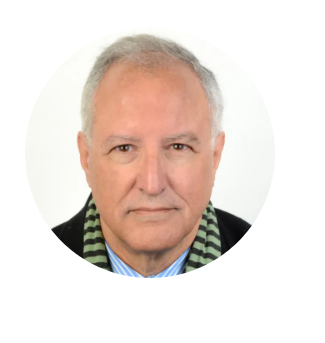
Prof. Mohammed S. Dajani Daoudi
Founder, Wasatia Movement
Palestine
Director, Wasatia Graduate Academic Institute
Presentation Details
Monday, 25 January 2027
17:00–18:00 CET
Christians and Muslims in Israel — Facts, Myths and Lived Reality
Religion, Society & Interreligious Studies
International Academic Conference Series
Institute for Hebrew Language and Literature
Belgrade, Serbia
Live online via Zoom
English
Academic Profile
Prof. Mohammed S. Dajani Daoudi is a Jerusalem-born Palestinian scholar, educator and peace advocate whose work has focused on moderation, reconciliation, interreligious understanding and Palestinian–Israeli dialogue. He is the founder of the Wasatia Movement, established to promote a culture of moderation, tolerance, dialogue, peace and reconciliation, and serves as Director of the Wasatia Graduate Academic Institute.
Dajani previously served as the founding director of the American Studies Graduate Program at Al-Quds University, where he worked from 2002 to 2014. He has taught at several universities and has written extensively on Arab and Islamic politics, Palestinian society, Arab–Israeli relations, democracy, reform, civil society, religious freedom, moderation and conflict resolution.
He holds two doctoral degrees, one from the University of South Carolina and another from the University of Texas at Austin. He has also served as a Weston Fellow at The Washington Institute for Near East Policy. His long-standing academic and public work has emphasized the importance of education, empathy, mutual recognition and reconciliation in addressing Palestinian–Israeli conflict.
In 2007, he established the Wasatia Movement to advance moderation, peace and reconciliation. His work has also included collaboration connected with the European Wasatia Graduate School for Peace and Conflict Resolution at Europa-Universität Flensburg.
Dajani has become internationally known for advocating engagement across political and religious divisions. In 2014 he led a group of Palestinian students on an educational visit to Auschwitz-Birkenau, an initiative intended to promote understanding of the Holocaust and empathy with the historical experience of the other. His broader work argues that sustainable conflict resolution requires dialogue, reciprocal recognition and the rebuilding of trust between communities.
Presentation Overview
This presentation is provisionally titled "Palestinian–Israeli Dialogue and Coexistence: My Reflections in 2026." Drawing on Prof. Mohammed S. Dajani Daoudi's long-standing work on moderation, reconciliation, interreligious understanding and Palestinian–Israeli dialogue, the session will provide space for his reflections on the possibilities and obstacles facing dialogue and coexistence in the contemporary Palestinian–Israeli context.
The broader thematic context includes the role of moderation in conflict, the rebuilding of trust, mutual recognition, religious and political reconciliation, education for empathy, and the practical possibilities for reducing hostility between communities. These themes correspond directly to Prof. Dajani's established research, educational and peacebuilding work through the Wasatia Movement and related academic initiatives.
The title above is an organizer-provided working title. The final speaker-supplied title and abstract will replace or supplement this presentation overview if Prof. Dajani provides revisions.
Abstract
The final speaker-supplied abstract will be added here once received. The working presentation title and verified research context are provided on this page.
Palestinian–Israeli Dialogue, Moderation and Coexistence
Questions of Palestinian–Israeli dialogue and coexistence extend beyond formal diplomacy. They also concern education, religious and political narratives, social trust, recognition of the other, intergroup contact, historical memory and the ability of communities to maintain dialogue during periods of conflict.
Prof. Dajani's work has consistently approached these questions through the concept of wasatia—moderation, balance and a middle path—and through the argument that reconciliation requires engagement rather than the abandonment of dialogue. His academic and public initiatives have addressed the role that education, empathy, religious moderation and mutual recognition can play in creating conditions for conflict resolution.
The January 2027 forum provides a pluralistic setting in which these ideas can be considered alongside different Jewish, Christian and Muslim perspectives. The conference does not prescribe a predetermined political or ideological conclusion; speakers are invited to present their own expert assessments, criticisms and proposals within an academically respectful framework.
Areas of Expertise
- Palestinian–Israeli Dialogue
- Conflict Resolution
- Reconciliation
- Peacebuilding
- Moderate Islam
- Wasatia
- Interreligious Dialogue
- Palestinian Society
- Arab–Israeli Relations
- Arab and Islamic Politics
- Religious Moderation
- Religious Tolerance
- Civil Society
- Democracy and Reform
- Education for Peace
- Empathy and Mutual Recognition
- Holocaust Education
- Middle East Studies
Education and Academic Development
LL.B.
Faculty of Law
The Hebrew University of Jerusalem
M.A., Political Science
Peace and Conflict Management Program
University of Haifa
Ph.D., Sociology
University of Haifa
Research focus: Collective identity and narratives of Arab Christianity in Israel
Advanced Study Affiliation
Polonsky Academy for Advanced Study
Van Leer Jerusalem Institute
Research Interests
- Cultural Sociology
- Political Sociology
- Arab Christian Identity
- Christian–Muslim Relations
- Palestinian Citizenship in Israel
- Palestinian National Identity
- Shared Society
- Symbolic Boundaries
- Sectarianism
- Nationalism
- Ethnic and National Groups
- Minority–Majority Relations
- Political Belonging
- Civic Inclusion
- Collective Identity
- Israeli Society
- Israeli-Palestinian Relations
- Peace and Conflict Studies
Selected Research and Public Scholarship
"The Oslo Accords Held Promise; Extremists Derailed Them"
Policy analysis concerning the Oslo process and Palestinian–Israeli relations.
"Why Palestinians Should Support 'Normalization' with Israel"
Discussion of dialogue, normalization and Palestinian–Israeli engagement.
"Our Response to Terror Must Be Reconciliation"
An argument emphasizing moderation and reconciliation in response to political and religious violence.
"Reconciliation in the Midst of Conflict"
Analysis of moderation, mutual recognition and reconciliation during ongoing conflict.
"Why Palestinians Should Learn about the Holocaust"
Co-authored discussion of Holocaust education and Palestinian understanding of Jewish historical experience.
Wasatia: The Spirit of Islam
Work presenting the Wasatia concept of moderation, balance and the middle path in Islam.
Academic Profiles and Verified Sources
The Washington Institute for Near East Policy
Policy analysis and professional archive
Visit Profile →Europa-Universität Flensburg
European Wasatia Graduate School for Peace and Conflict Resolution
Visit University →Conference Participation
Prof. Mohammed S. Dajani Daoudi presents "Palestinian–Israeli Dialogue and Coexistence: My Reflections in 2026" at the Religion, Society & Interreligious Studies International Academic Conference Series on Monday, 25 January 2027, from 17:00 to 18:00 CET.
The conference, "Christians and Muslims in Israel — Facts, Myths and Lived Reality," is organised by the Institute for Hebrew Language and Literature, Belgrade, Serbia, and takes place live online via Zoom from 25 to 28 January 2027. The working language is English.
Keywords
Suggested Citation
Dajani Daoudi, Mohammed S. "Palestinian–Israeli Dialogue and Coexistence: My Reflections in 2026." Presentation at Christians and Muslims in Israel — Facts, Myths and Lived Reality, Religion, Society & Interreligious Studies International Academic Conference Series, Institute for Hebrew Language and Literature, 25 January 2027.
Attend Prof. Mohammed S. Dajani Daoudi's Presentation
Join Prof. Mohammed S. Dajani Daoudi live online on Monday, 25 January 2027, from 17:00 to 18:00 CET for a presentation addressing Palestinian–Israeli dialogue, coexistence, moderation and reconciliation from the perspective of his long-standing academic and peacebuilding work.